Most people look at a roof anchor and see a solid bit of steel on the roof. What they don't see is what's holding it down. On a metal roof, that's usually a handful of rivets. If those rivets haven't set properly, the anchor is sitting there on trust.
We find this on Melbourne roofs all the time. It's one of the most common defects we pick up on anchor inspections, and you won't spot it with a quick look.
What a good rivet looks like
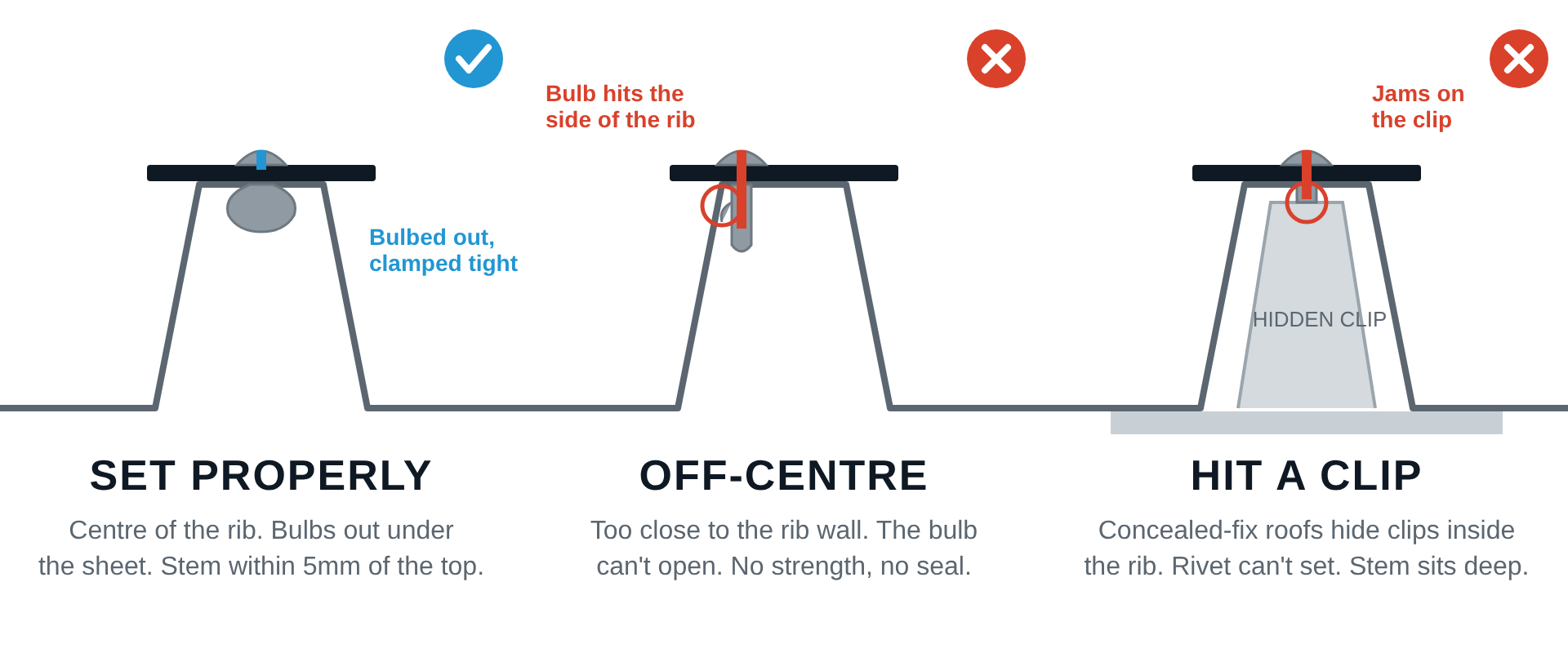
Anchors on metal roofs are usually fixed with Bulb-Tite rivets. Drill through the base plate into the top of the roof rib, push the rivet in, set it. As it sets, the rivet "bulbs out" under the sheet and clamps everything tight. A sealing washer under the head keeps the water out.
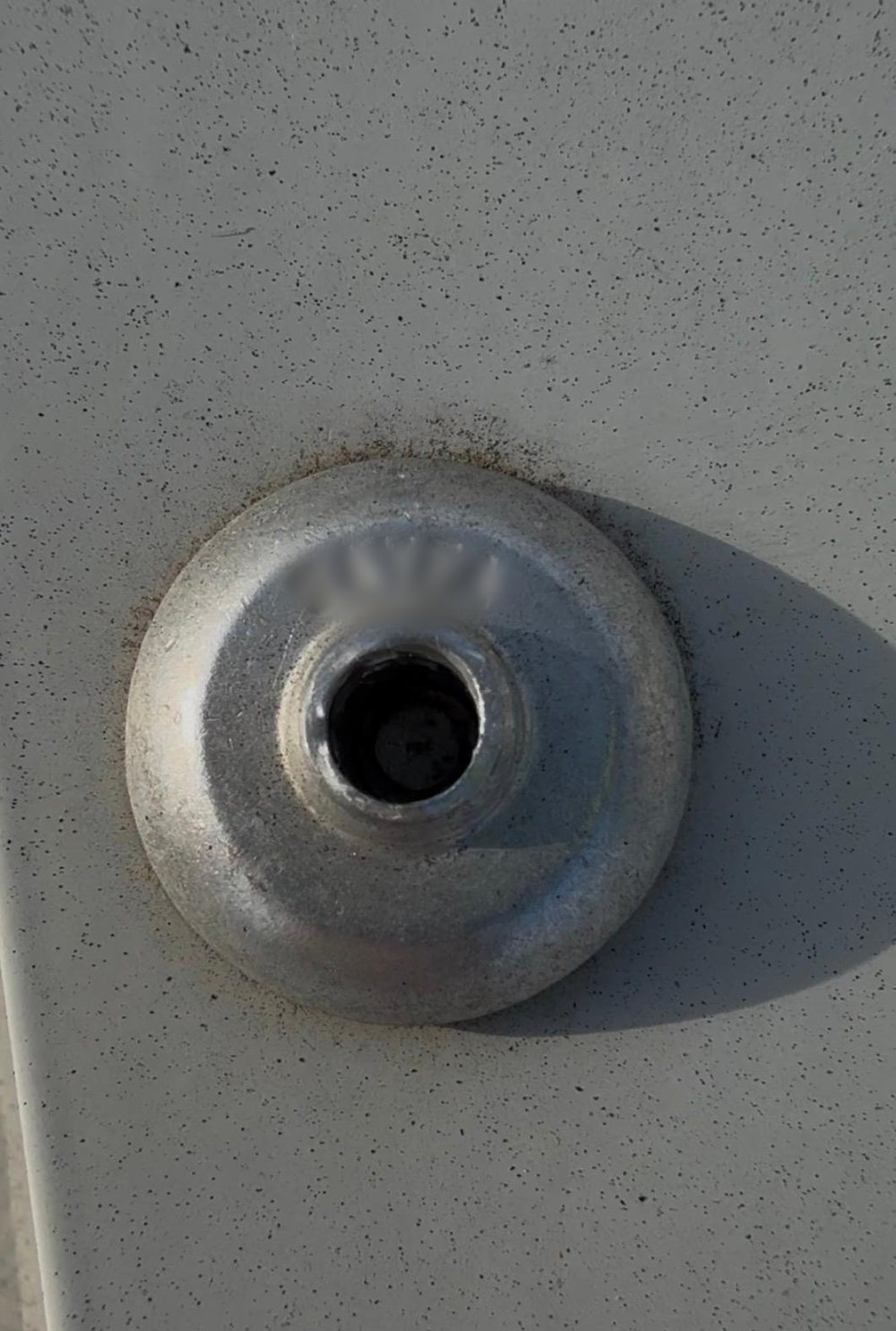
A properly set rivet has its stem sitting just above or just below the top of the head. Manufacturer guidance is no more than 5mm below. Any deeper and something's wrong.
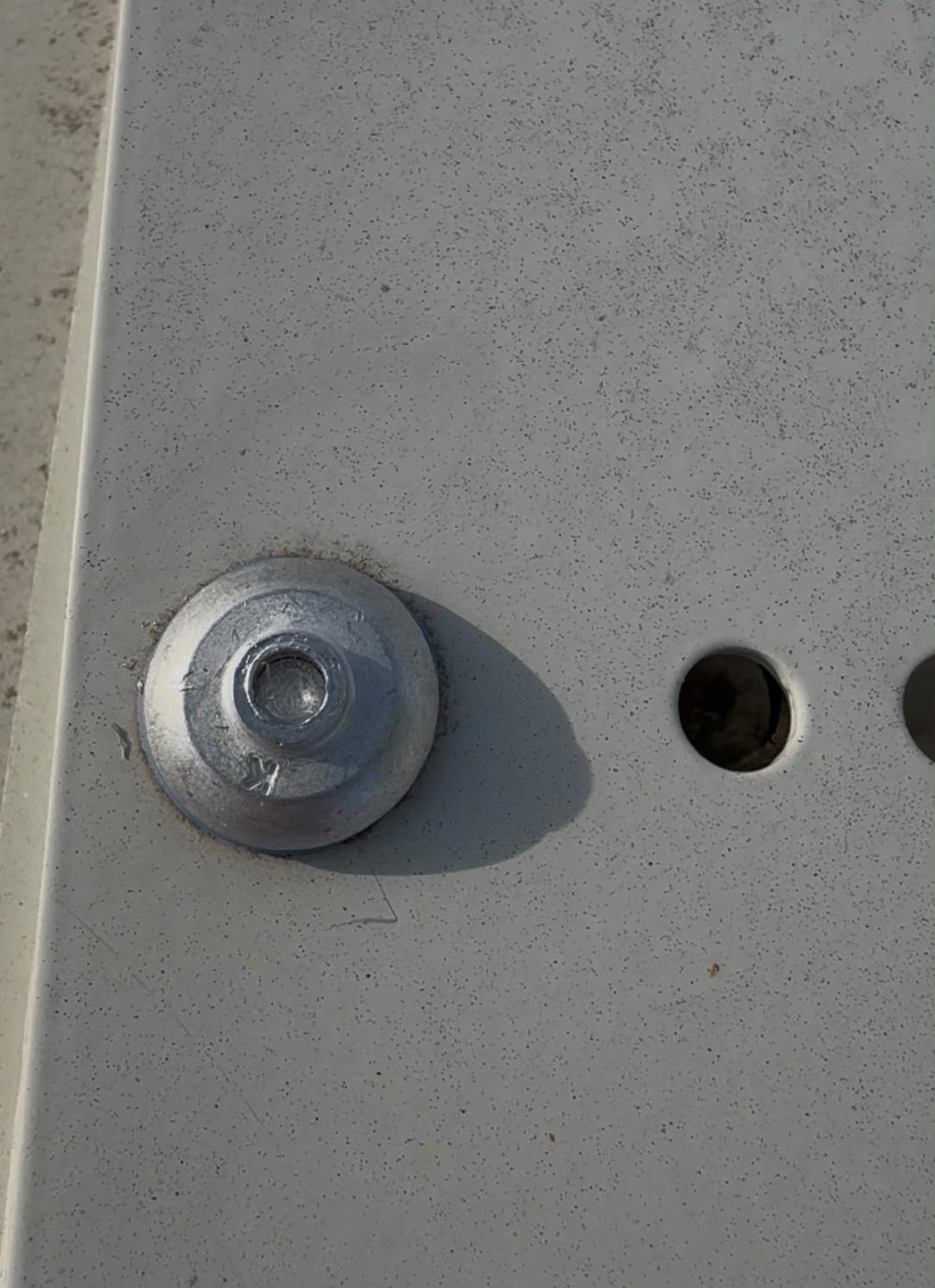
What a failed one looks like
When the stem has dropped well below the surface, the rivet hasn't bulbed out. It isn't clamping anything. That fixing has no strength.
We see two causes over and over.
It's gone in off-centre. The rivet needs to go into the centre of the rib. Off to one side, the bulb hits the sloping wall of the sheet and can't open up.
It's hit a clip. Concealed-fix roofs like Klip-Lok are held down by clips inside the ribs. You can't see them from on top. There's no way to know exactly where they are, so every installer is taking their best guess. Rivet over one and it jams on the clip instead of opening up under the sheet.
That second one isn't always a bad installer. You're fixing into a roof you can't see inside. What separates a good job from a bad one is whether someone checks every rivet after it's set. A rivet that's hit a clip gives itself away straight away, because the stem sits too deep. Catch it then and it's a five-minute fix. Miss it and it sits there for years.
It looks finished from above. Underneath, it's doing nothing.
Why it's a safety problem
An anchor is designed to hold with all of its fixings doing their job. If one isn't holding, the rest are carrying load they were never meant to carry on their own. And nobody finds out until someone falls and the anchor gets loaded for real. That's the worst possible time to learn a rivet never set.
A tag saying "certified" doesn't mean much if nobody checked what's holding the anchor down.
Why it's also a leak
A rivet that hasn't bulbed out hasn't squashed its sealing washer either. So you've got a hole in your roof with a loose rivet sitting in it. Water gets in, runs along the sheeting and turns up inside, often nowhere near the anchor. You end up chasing a stain on the ceiling when the cause is a fixing on the roof.
How we check it
On every anchor inspection we check the fixings, not just the anchor. The depth check is simple: drop a probe into the head, mark it, pull it out and measure.
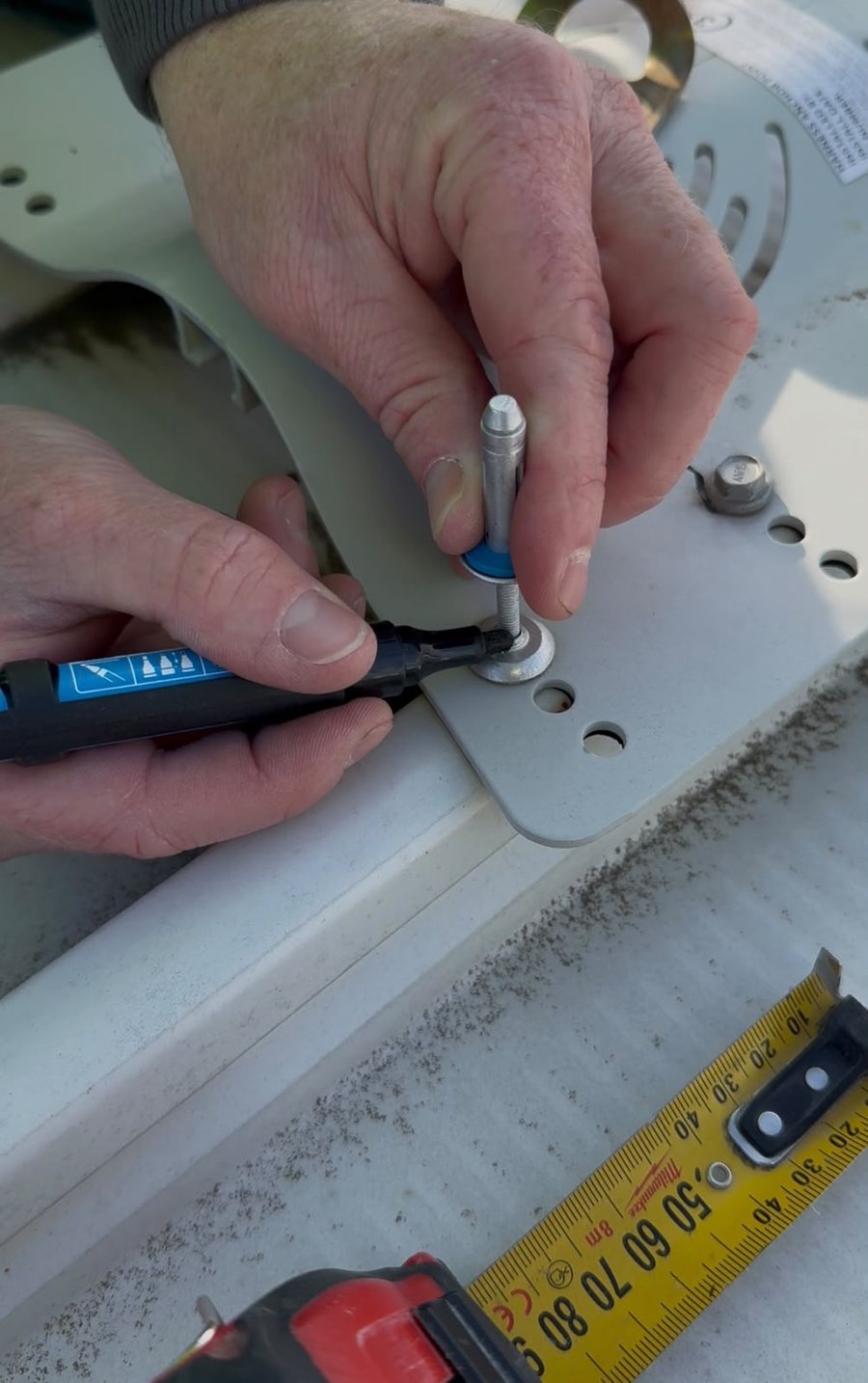
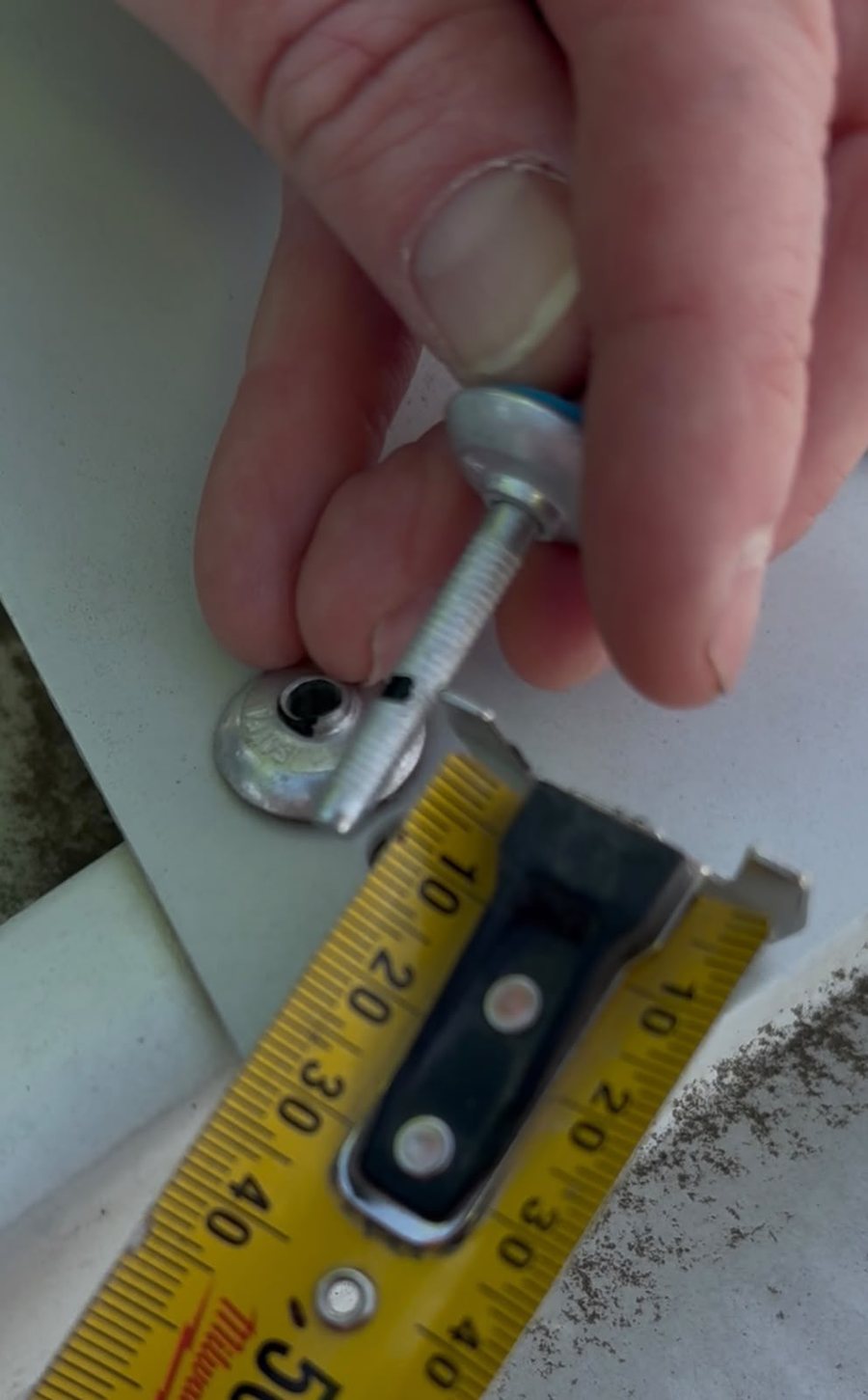
What we look at:
- Stem depth on every rivet. Within 5mm of the top is a pass.
- The sealing washer underneath. It should be squashed, and the rivet should feel tight.
- Rivet position. It needs to be in the centre of the rib.
- Sealing. Where a rivet sits 3mm or more below, it gets a bead of silicone.
Anything that fails is tagged out of service and refixed before it goes back into use.
The takeaway for building managers
Got a roof leak nobody can pin down, and anchors on a metal roof? Start with the fixings.
And when your anchors are due for recertification, ask the question most people don't: did anyone check the rivets, or just the tag?
When was the last time someone checked yours?