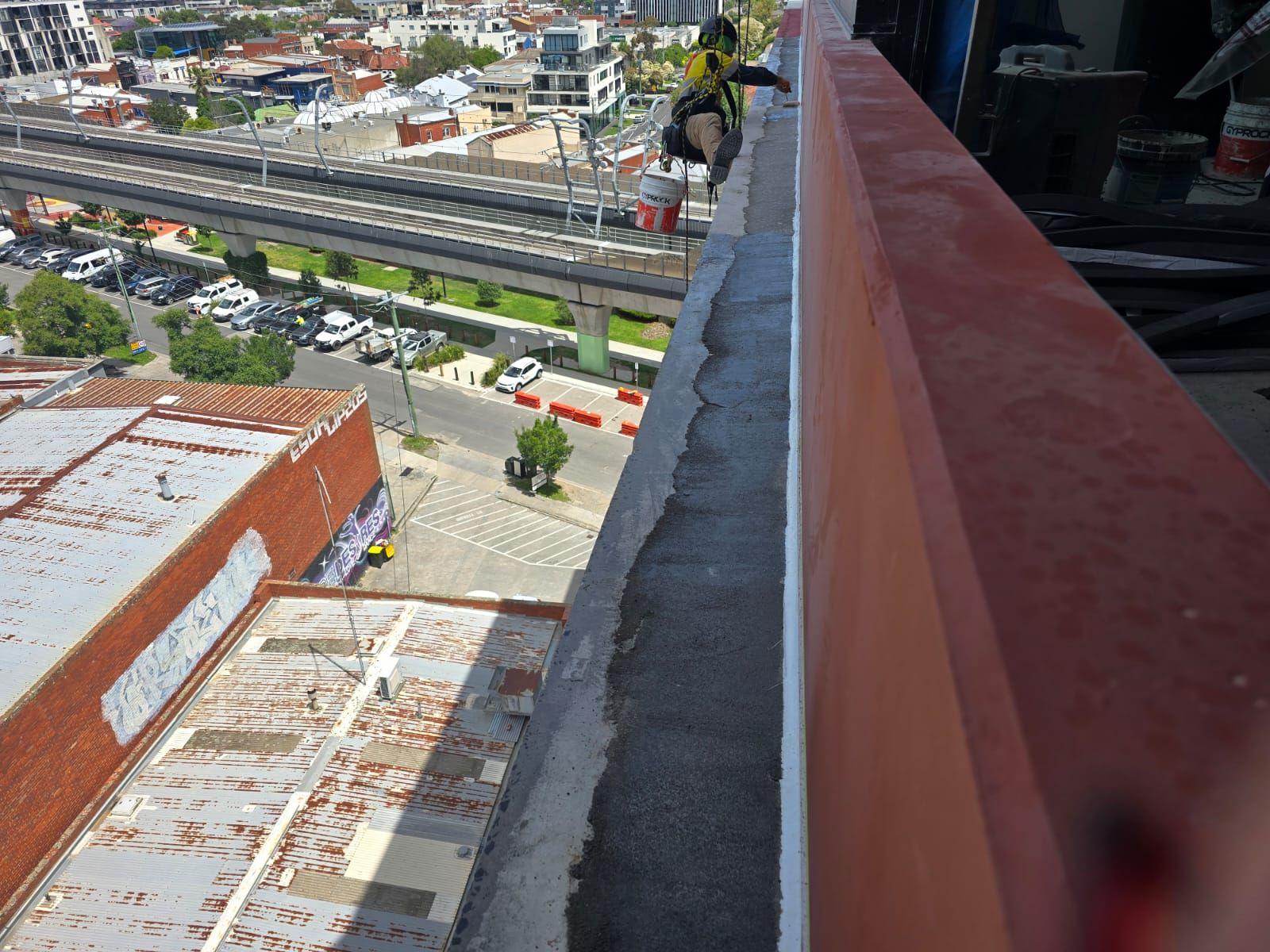
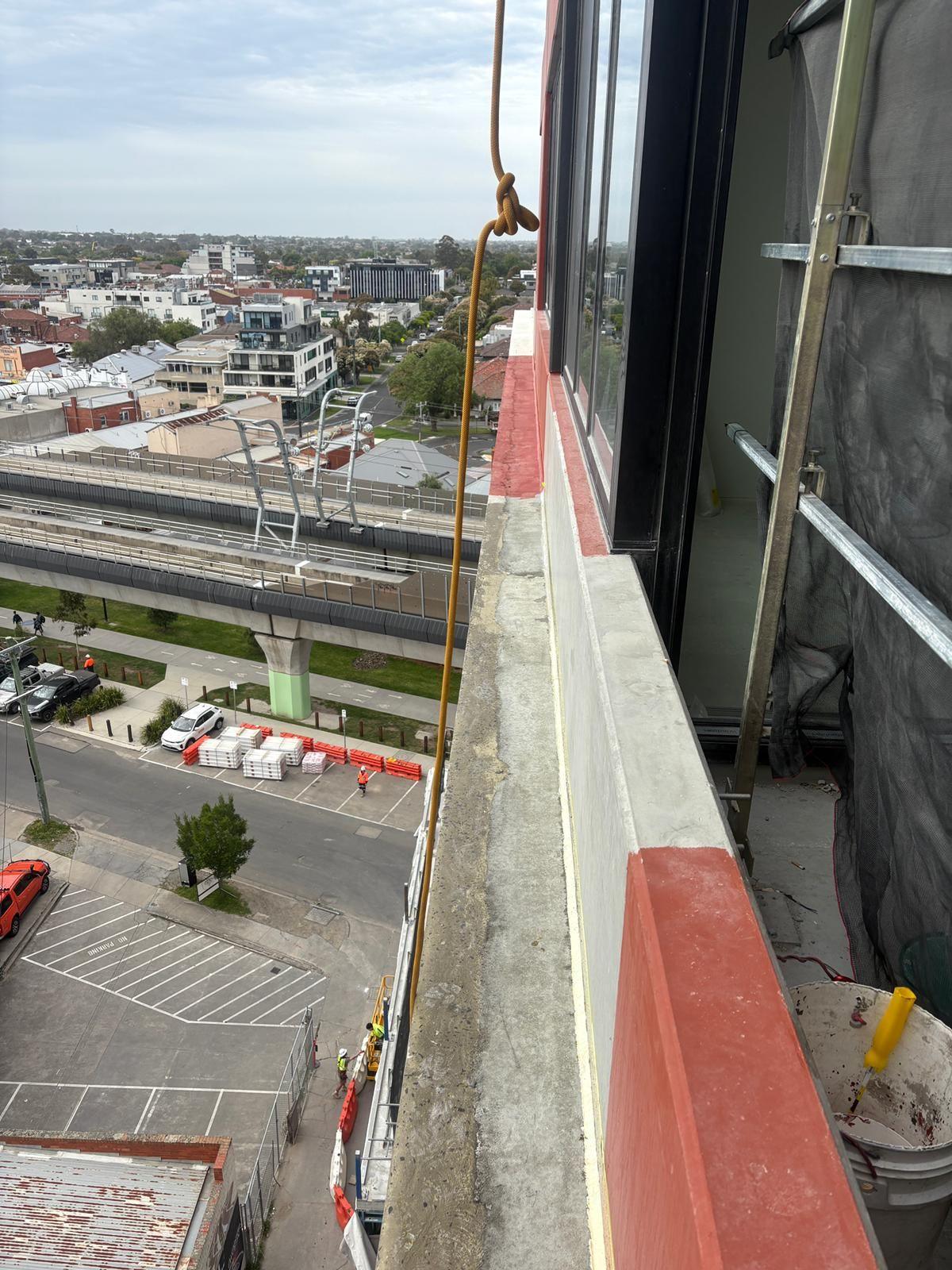
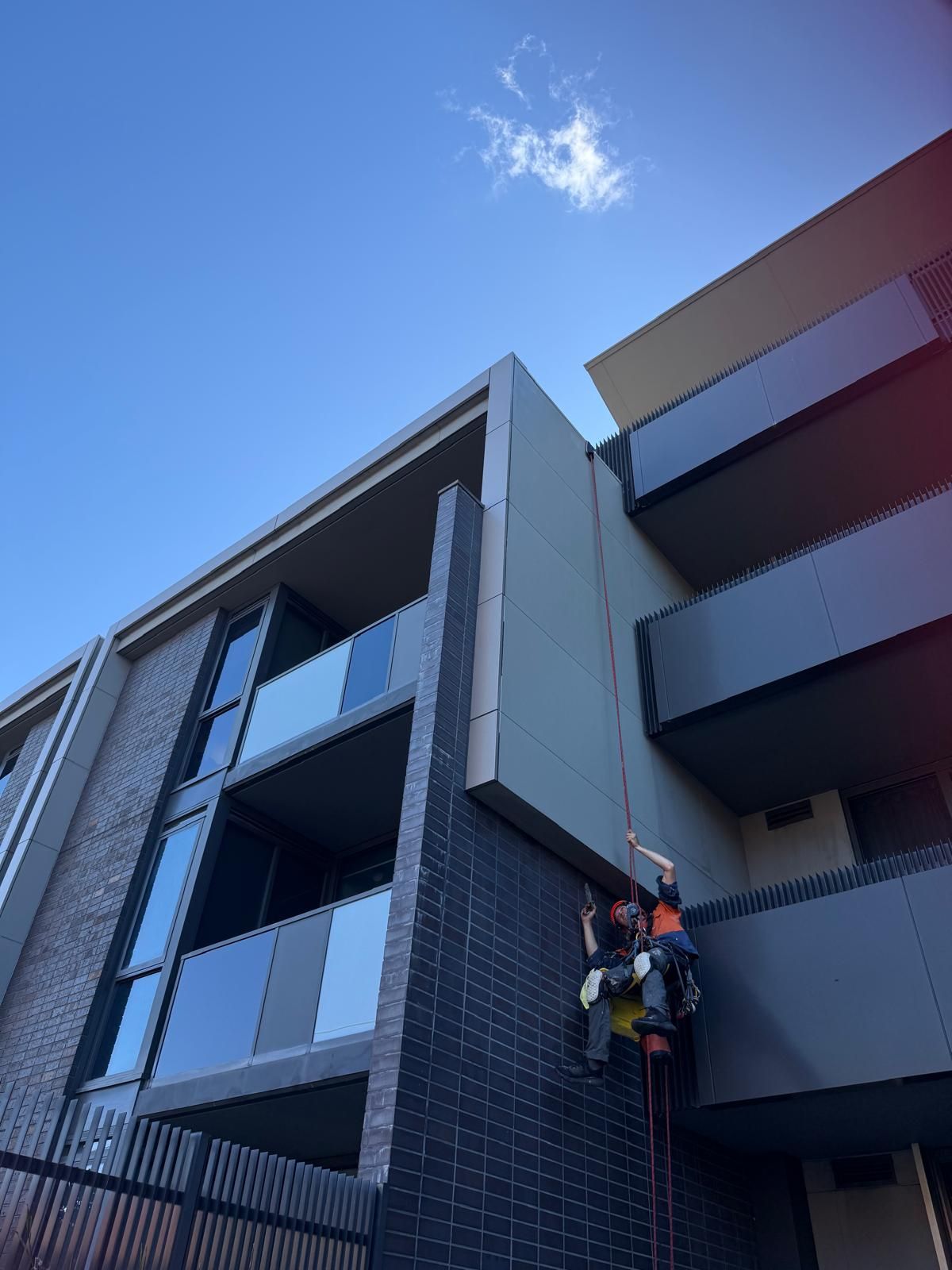
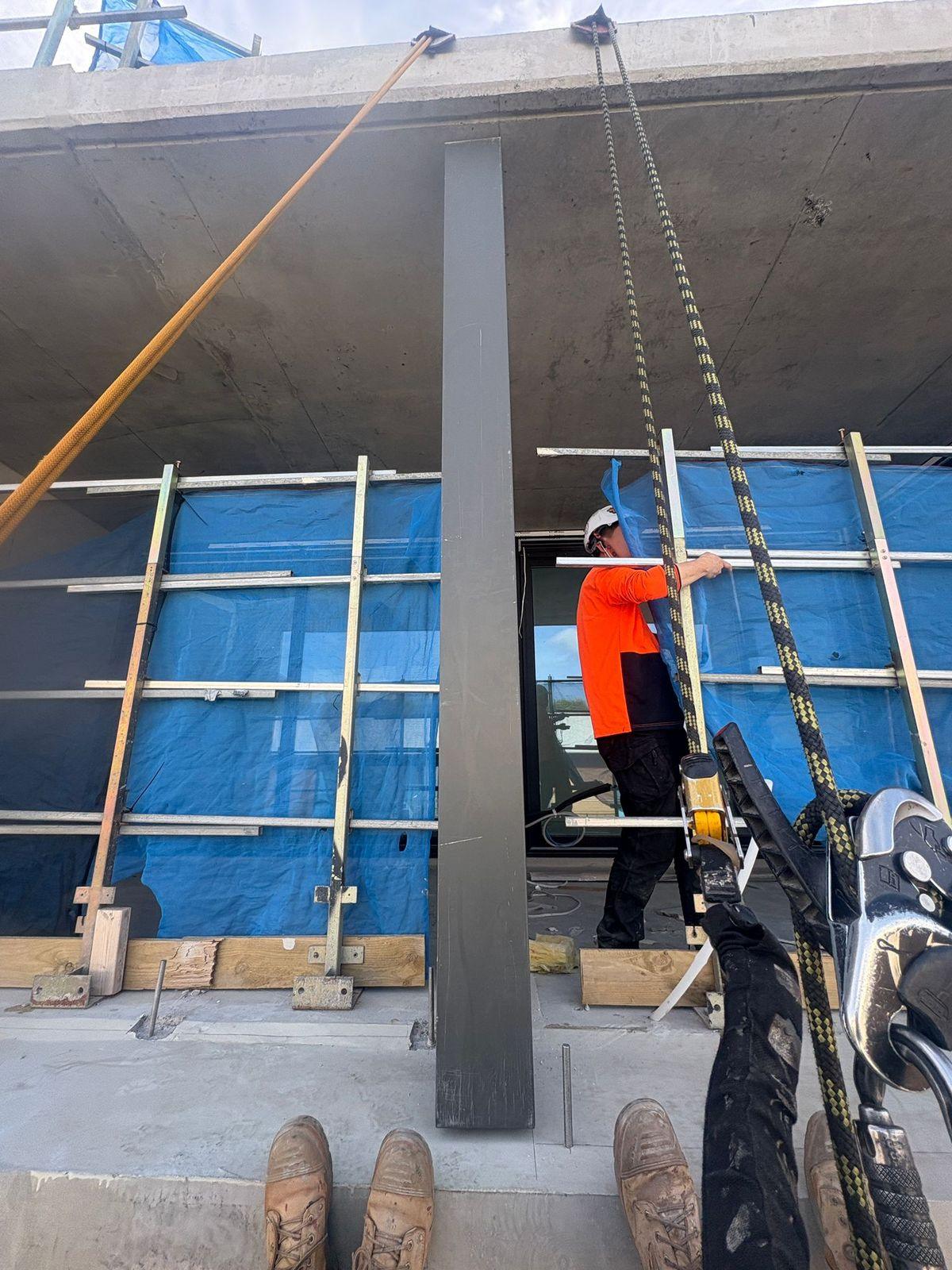
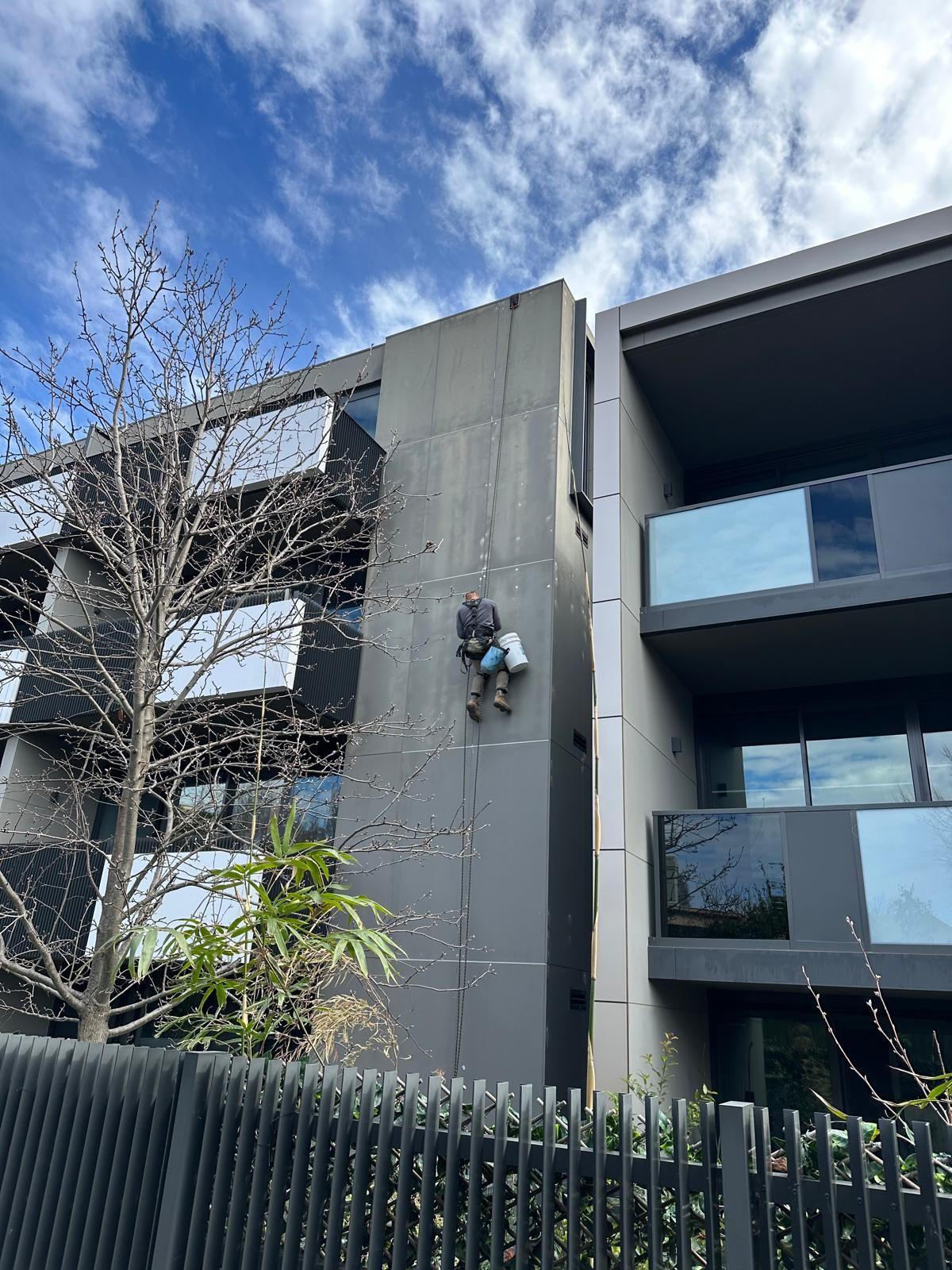
Concrete cancer, spalling slab edges, cracking and failed patch jobs, repaired from ropes for strata managers, FMs and builders across Melbourne and Victoria. No scaffolding. Every defect photographed.
A facade doesn't fail all at once. It starts as a rust stain under a balcony edge, a hairline crack, a patch that never quite matched. Leave it and it turns into concrete dropping onto a footpath, water in the apartment below and a much bigger bill.
We repair concrete and facade defects on apartment buildings, commercial buildings and new construction across Melbourne. Slab edges, balcony edges, soffits, parapets, columns, cladding and facade elements. We find out why it failed, fix the cause, then make it look right.
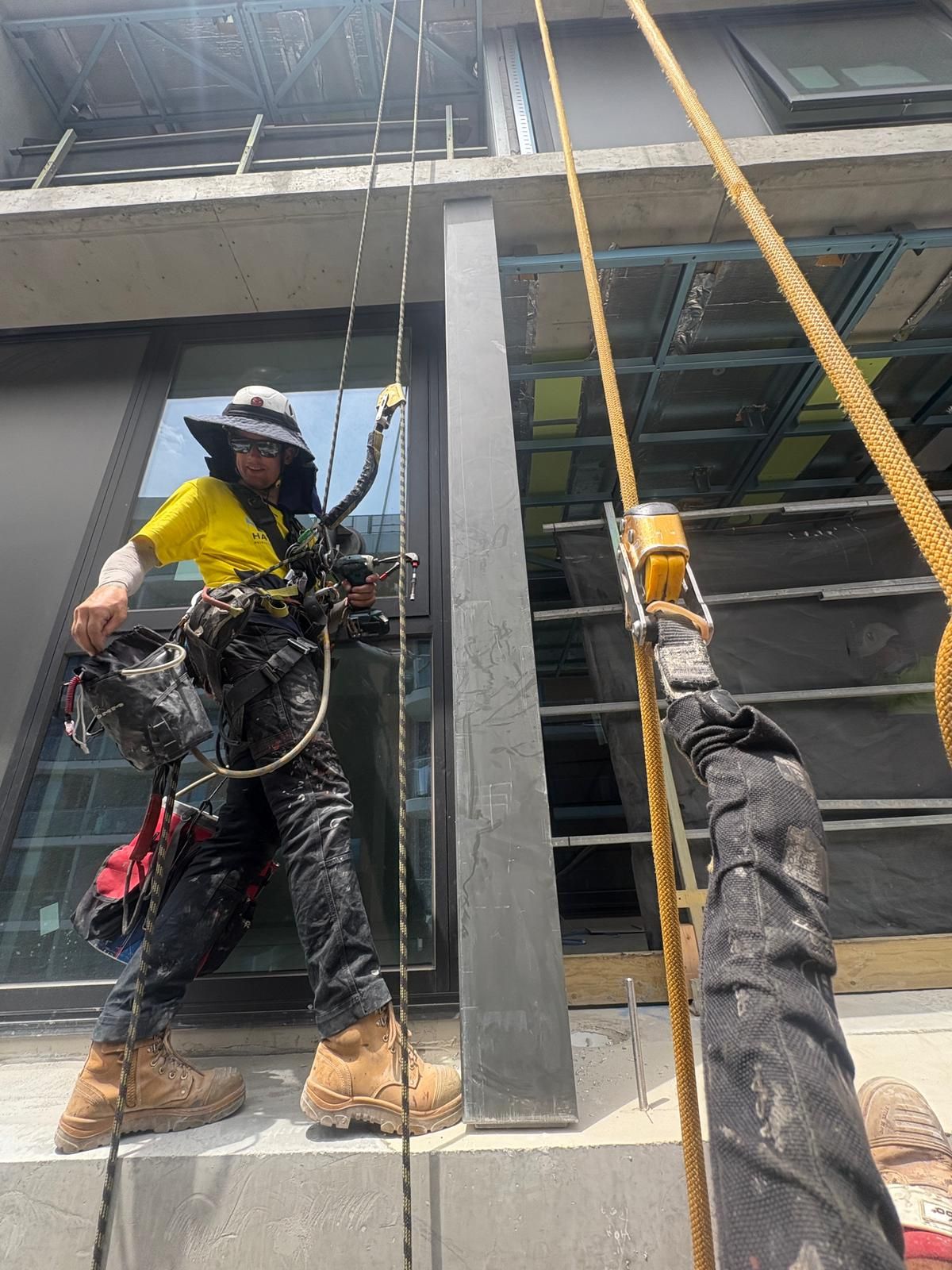
Because we work on ropes, we get hands-on with every defect without scaffold or boom lifts. Less cost, less disruption, and nothing gets skipped because it was too hard to reach. Most facade jobs also involve caulking and joint sealing, which we do in-house.
Every photo here is from a real Melbourne building we've worked on. If your building looks like any of these, the damage behind the surface is usually worse than what you can see.
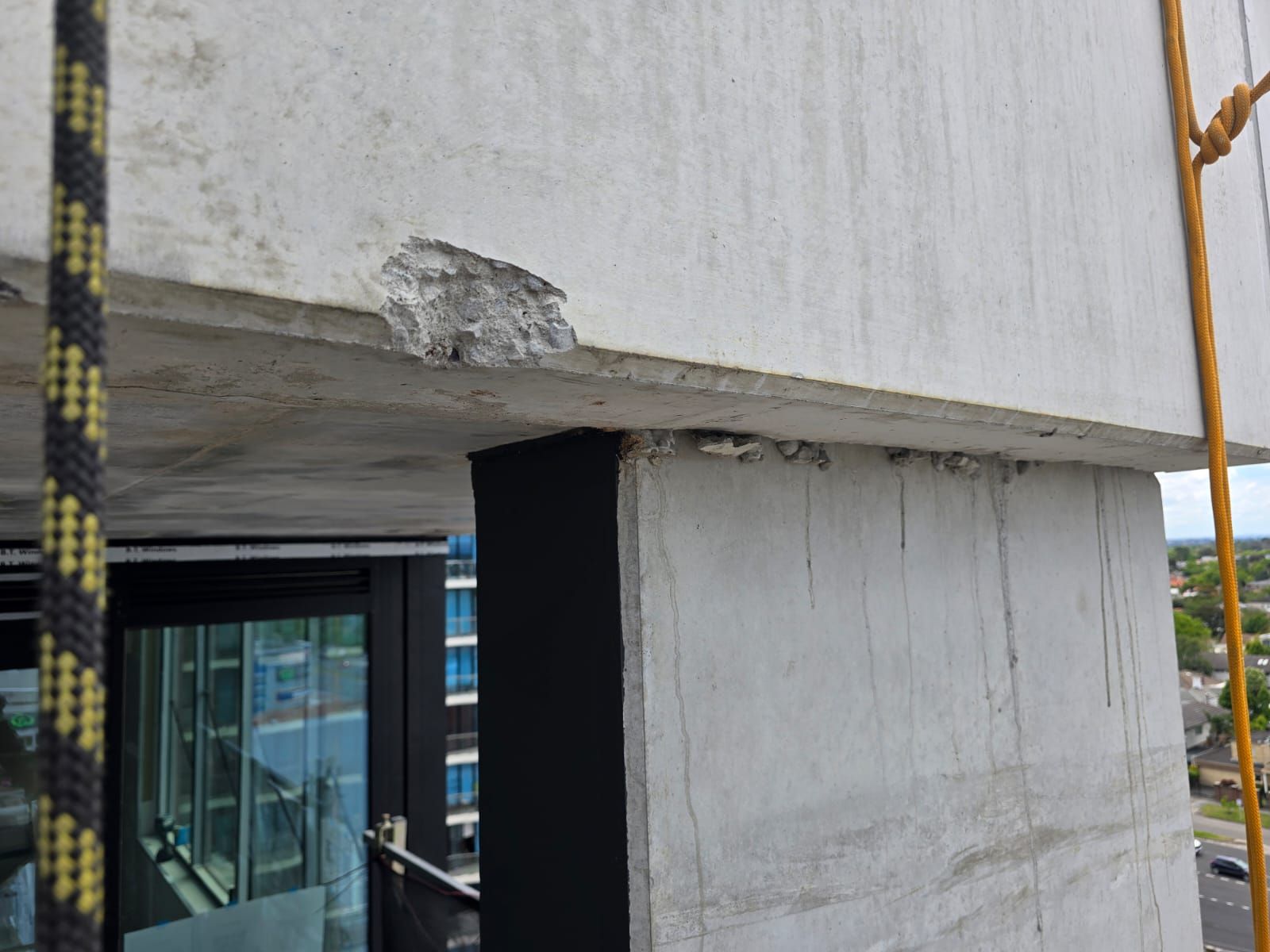
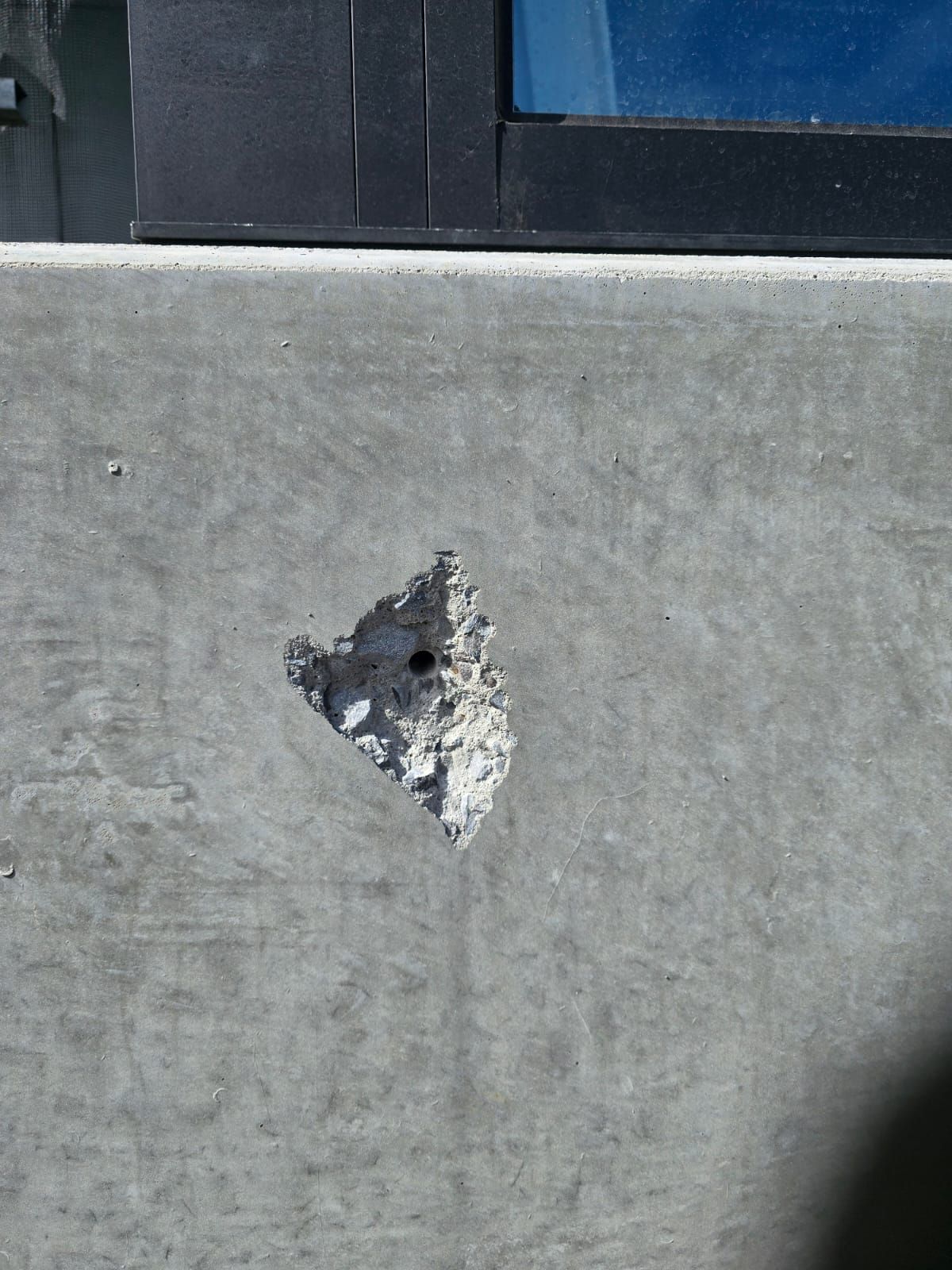
Concrete breaking away from a slab edge. Usually rusting steel underneath pushing it off. The next piece can land on whatever is below.
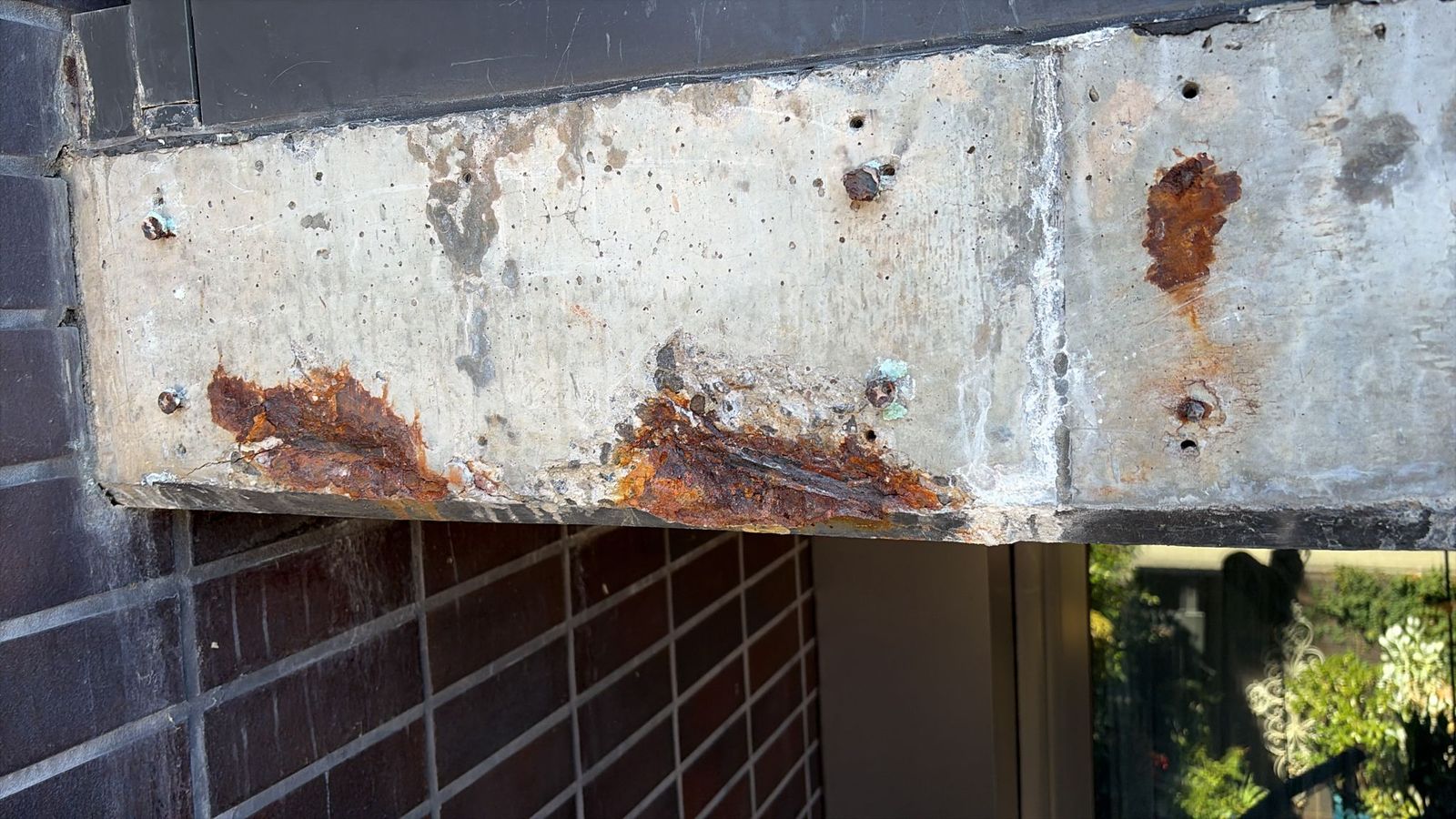
Rust stains coming out of concrete mean steel inside is corroding. This is the early warning. Fix it now and the repair is small.
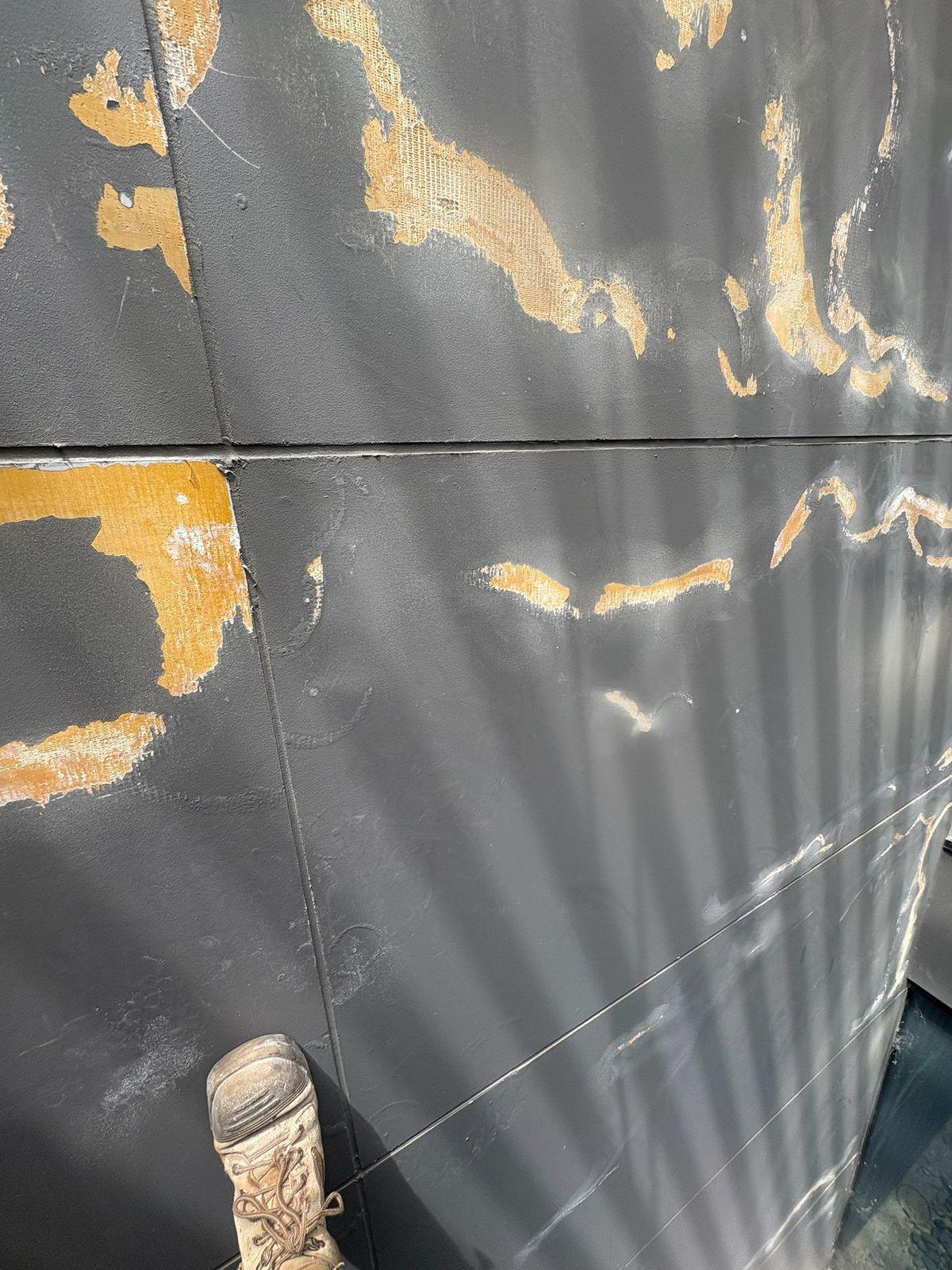
Filler smeared over a defect and painted. It looks fine for a year, then lifts and peels. You end up paying to fix the same spot twice.
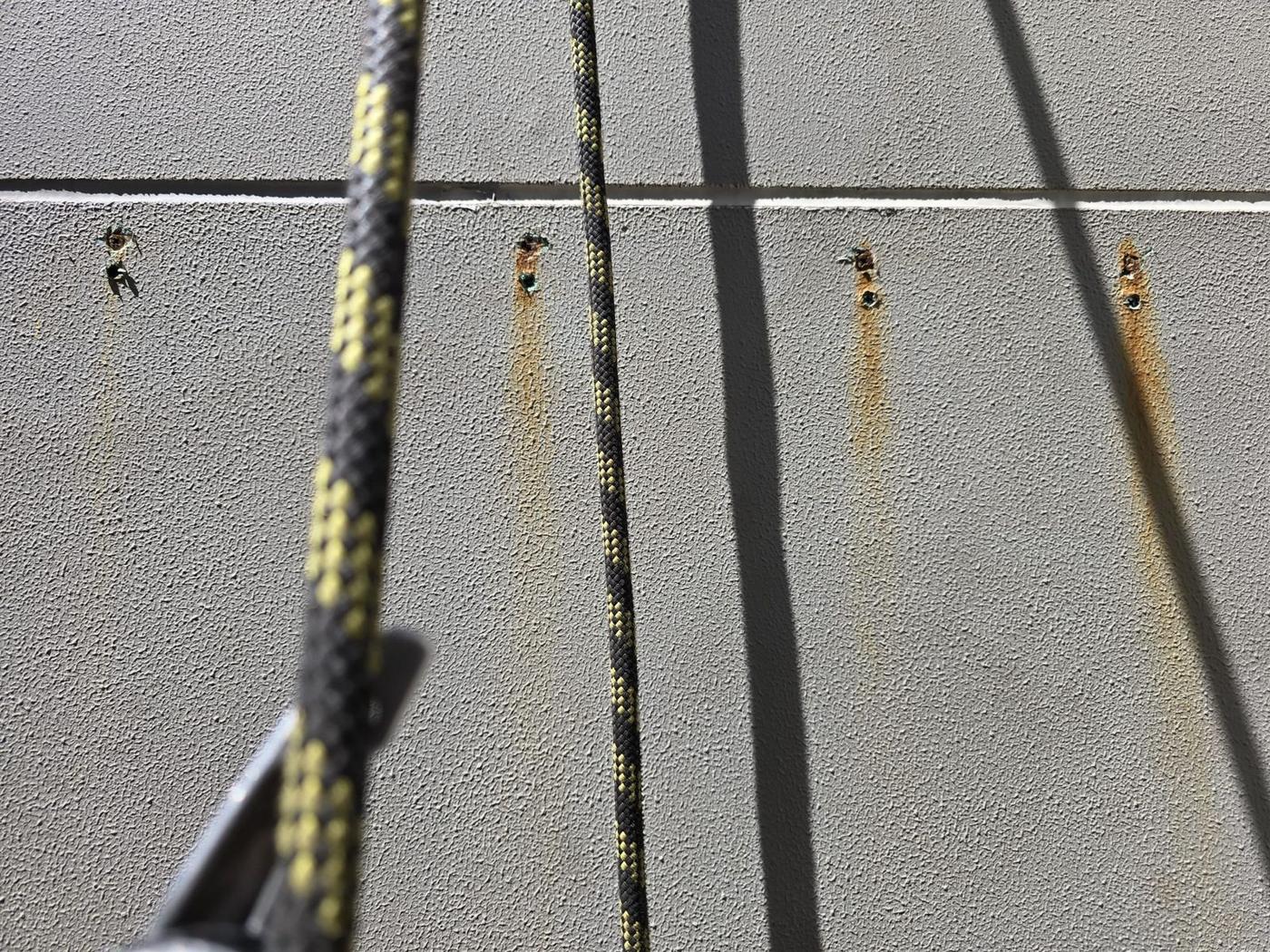
Rust streaks running down from panel fixings. The wrong fixing for an exposed facade, and it's staining the building and losing strength.
White, chalky staining running down concrete, render or brickwork. It's called efflorescence, and it means water is moving through your building.
Most people see that white crust and send in a cleaner. It's actually your building telling you water is getting in.
Here's how it forms. Water gets into the concrete or masonry, dissolves the natural salts inside it, then carries them to the surface. The water evaporates and leaves the salt behind as a white deposit. No water, no efflorescence. So if you can see it, water is travelling through that part of the building.
On a balcony soffit, slab edge or under a planter, that usually points to failed waterproofing, a cracked slab, a failed joint or water sitting where it can't drain. The white stuff itself does no harm. The water causing it does. Given enough time it reaches the steel, and that's how concrete cancer starts.
Washing it off or painting over it doesn't fix anything. It comes back, because the water is still getting in. We trace where the water is entering, fix that, then clean up the stain.

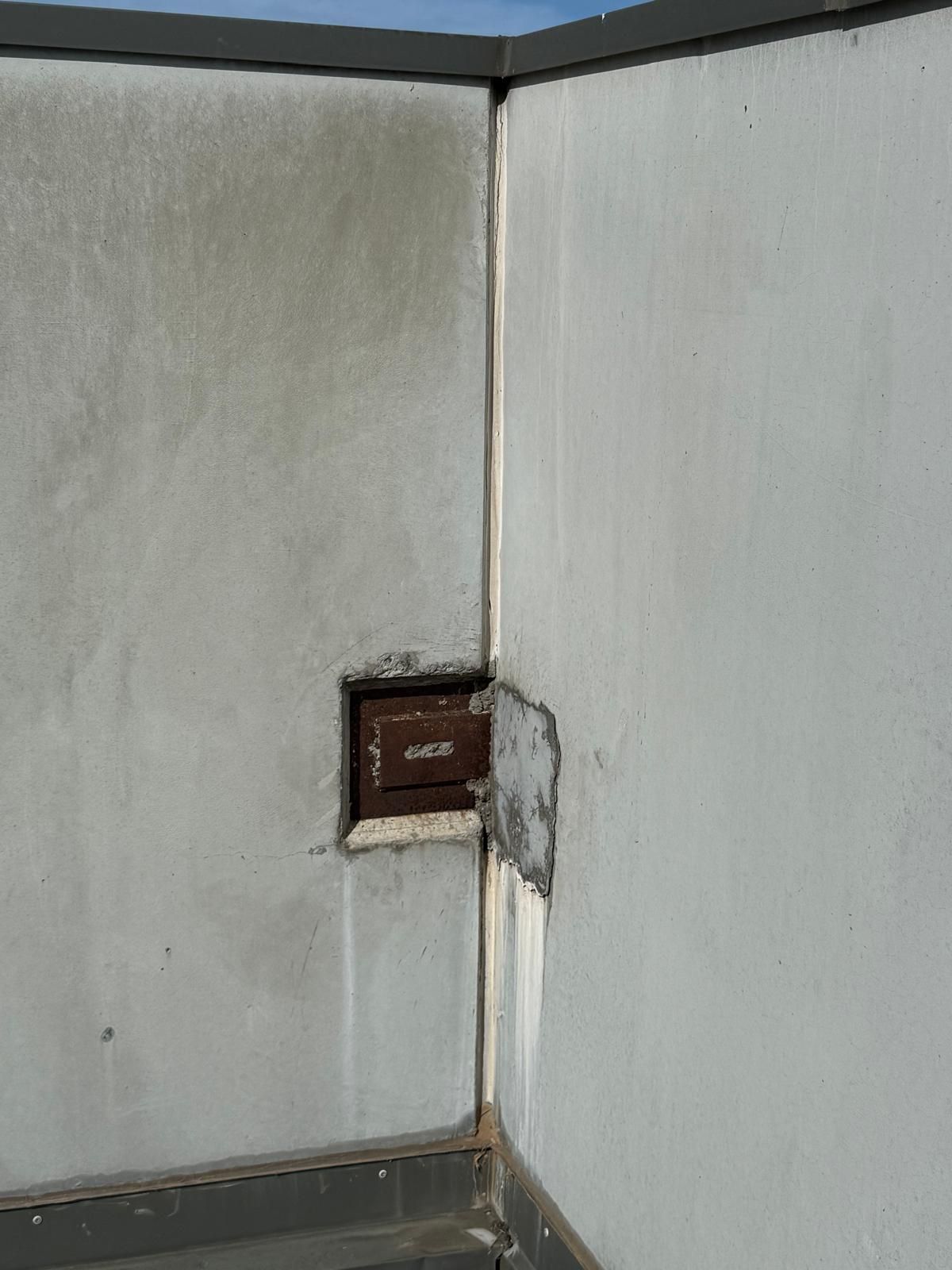
Rusting stitch plate at a precast panel corner, with white efflorescence running down the joint below. Water and steel, together.
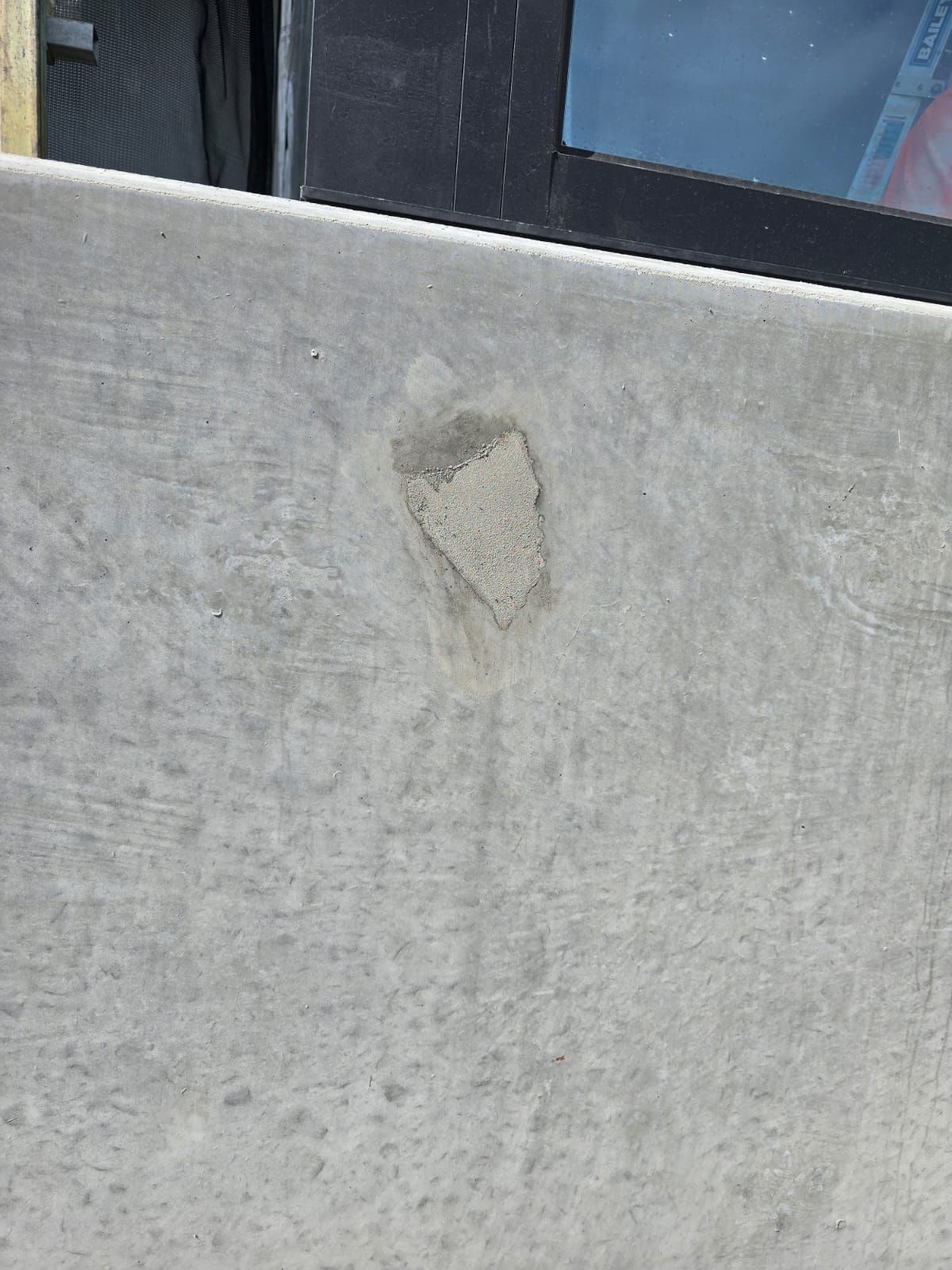
Loose and drummy concrete broken out back to sound material, reinforcement cleaned and treated, then rebuilt with repair mortar and finished to match. The cause gets fixed, not just covered.
Balcony edges, slab edges and soffits are where rust and spalling show up first on Melbourne apartment buildings. We repair them from ropes without closing balconies for weeks.
Cracks in concrete facades, columns and slabs assessed and repaired with the right method, from injection to routing and sealing. Cracks let water in, and water is what starts the rust.
We drop every face of the building and log each defect by elevation, drop and level, with photos and a severity rating. You get marked-up elevations showing what to fix first, so the committee can budget properly.
Anti-carbonation coatings, membranes and repaints applied at height to protect repaired concrete and finish the job. See our rope access painting page for full facade repaints.
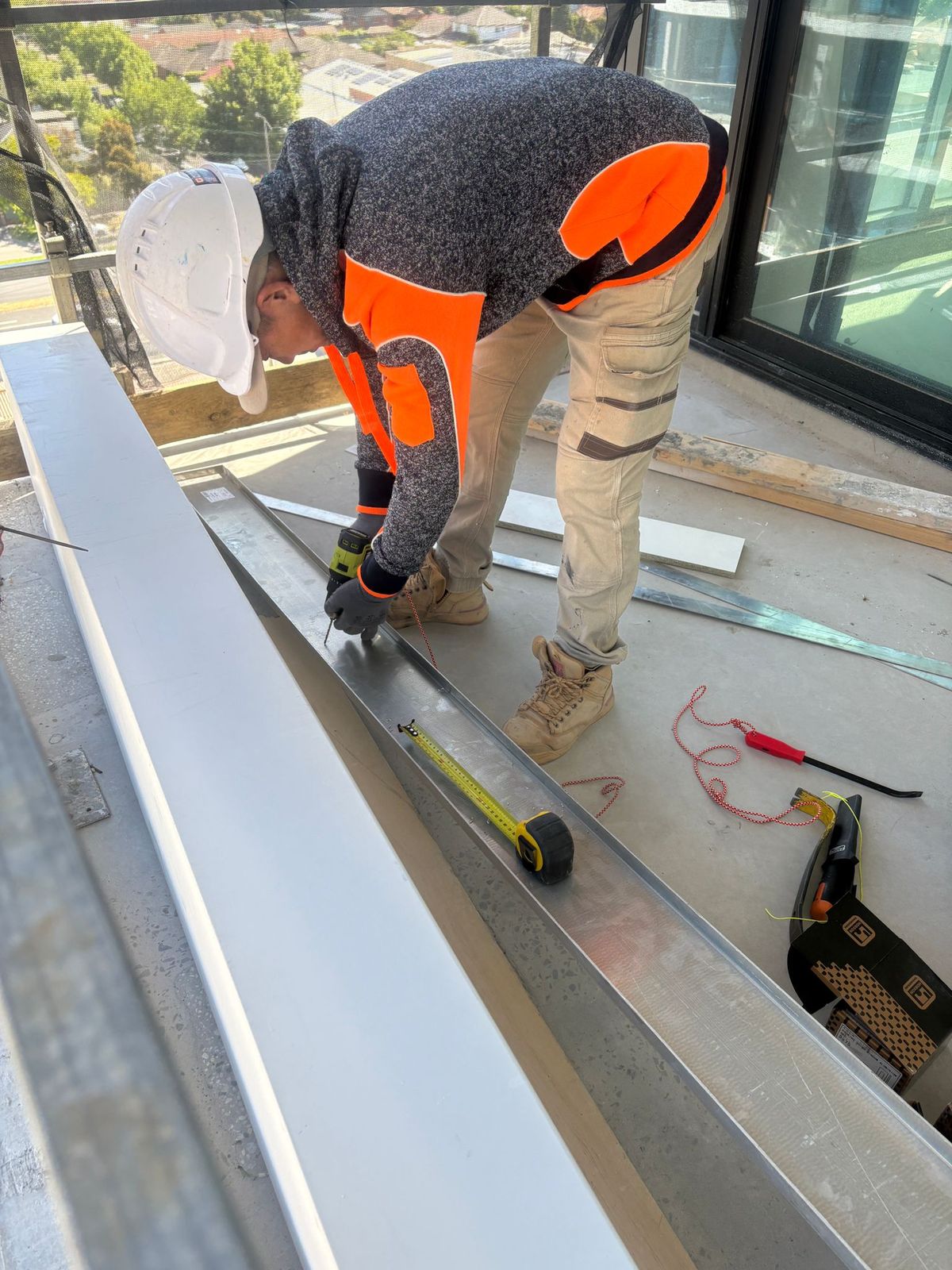
Failed patches, corroding fixings, flashings, cappings, fins and loose facade elements repaired or replaced at height. Builders use us for defect and finishing work on new projects too.
A spalled section of concrete on a new residential build in Carnegie. Prepped back, rebuilt and finished flush, from ropes.
The steel inside concrete is protected as long as the concrete around it stays sound. Over the years moisture, carbonation and salts work their way in. Once they reach the steel, it rusts. Rust takes up a lot more room than steel, so it pushes the concrete apart from the inside until it cracks and falls off.
That's why patching over the top doesn't work. The rust is still there, still growing, and the patch pops off a few years later. A proper repair goes back to sound concrete and clean steel. It costs a bit more on the day. It doesn't cost you again in three years.
Anyone can patch a hole. What matters is knowing why the hole is there, and making sure the repair outlasts the warranty. We spend our days hanging off Melbourne facades, so we see the same failures over and over and know what actually fixes them.
Balcony slab edges bleeding rust from corroding embedded steel, and cladding covered in old filler patches that had lifted through the paint. Repairs done properly from ropes, then repainted to match, with no scaffold across the building and residents left in their homes.
Spalled concrete at window heads and slab edges repaired, ledges screeded to falls and waterproofed, plus facade fins, flashings and cappings installed, all on rope access. The same crew did the access and the work, so the builder dealt with one trade instead of three.
Failed joints are the most common way water gets into a facade. Recaulking programs done from ropes.
Full facade repaints and protective coatings without scaffold.
Anchor point testing and height safety systems, so future facade maintenance is safe and cheaper.
Concrete cancer is the common name for corroding steel reinforcement inside concrete. Over time moisture, carbonation and salts reach the steel and it starts to rust. Rust takes up far more room than the steel it came from, so it pushes the concrete apart from the inside until it cracks and pieces fall off, which is called spalling. Rust stains bleeding out of the concrete are usually the first sign.
Efflorescence is the white, chalky staining you see on concrete, render and brickwork. It forms when water gets into the material, dissolves salts inside it and carries them to the surface, where the water evaporates and leaves the salt behind. The stain itself does no harm, but it means water is moving through that part of the building. On balconies, slab edges and soffits that usually points to failed waterproofing, cracks or failed joints. Left alone, that water can reach the steel reinforcement and start concrete cancer. If it keeps coming back after cleaning, or there is rust staining mixed in, get it inspected.
It can be. Loose concrete on a balcony edge, slab edge or soffit can drop onto footpaths, car parks or balconies below. Owners corporations are responsible for maintaining common property, so a spalling facade is a safety and liability issue as well as a maintenance one. If you can see cracking with rust staining, or pieces already missing, get it inspected.
You can, and that is exactly why so many repairs fail again within a few years. A patch over rusting steel traps the problem behind it. A proper repair breaks the concrete out back to sound material, cleans and treats the reinforcement, then rebuilds the section with a repair mortar before coating. It takes longer on the day but you only pay for it once.
Not for most jobs. We work on ropes, so we reach slab edges, balconies, soffits and high-level panels directly without scaffold or boom lifts. That removes a big cost from the quote, avoids weeks of scaffold across the building, and keeps disruption to residents and tenants to a minimum.
It depends on how many repairs there are, how deep the damage goes and how hard the areas are to reach. Smaller jobs are quoted as a fixed scope. Larger buildings usually start with an inspection so every defect is located and photographed, then the repairs are priced off that report. Send us your building address and photos and we'll quote within 24 hours.
Yes. We drop every face of the building, log each defect by elevation, drop and level, rate it by severity and photograph it. You get a report with marked-up elevations so your committee or builder can see exactly what is wrong, where it is and what to fix first.
Send us your building address and a few photos. Quote within 24 hours.