One of the most common misconceptions we come across is a simple one: the building has anchor points on the roof, so we're right to abseil off them. It sounds reasonable, but it isn't always the case, and we see it all the time.
That's why we always double-check the anchors before we commit to working off them. It isn't us being difficult. Getting it right up front is exactly what saves you time and money down the track.
The reason comes down to what the anchors were actually made for. Anchors are rated for different types of work, and the difference matters when it comes to safety and compliance. Here's a plain-English look at the two most common uses, and why you can't always treat one as the other.
Fall arrest: there to catch you
A fall arrest anchor does exactly what the name says. A worker clips on with a harness and lanyard, and if they slip or fall, the anchor takes the load and stops them hitting the ground or a lower level.
The key thing to understand is that a fall arrest anchor spends almost all of its life doing nothing. It only ever takes load in the moment of a fall, and that load comes on suddenly. These anchors are designed and tested for that exact scenario: a sudden shock load, once.
In Australia, single-point anchors like these are manufactured to AS 5532. They're tested to hold 15kN for single-person use and 21kN for two-person use, using a dynamic drop test on the type of structure they'll be fixed to, not just a gentle static pull.
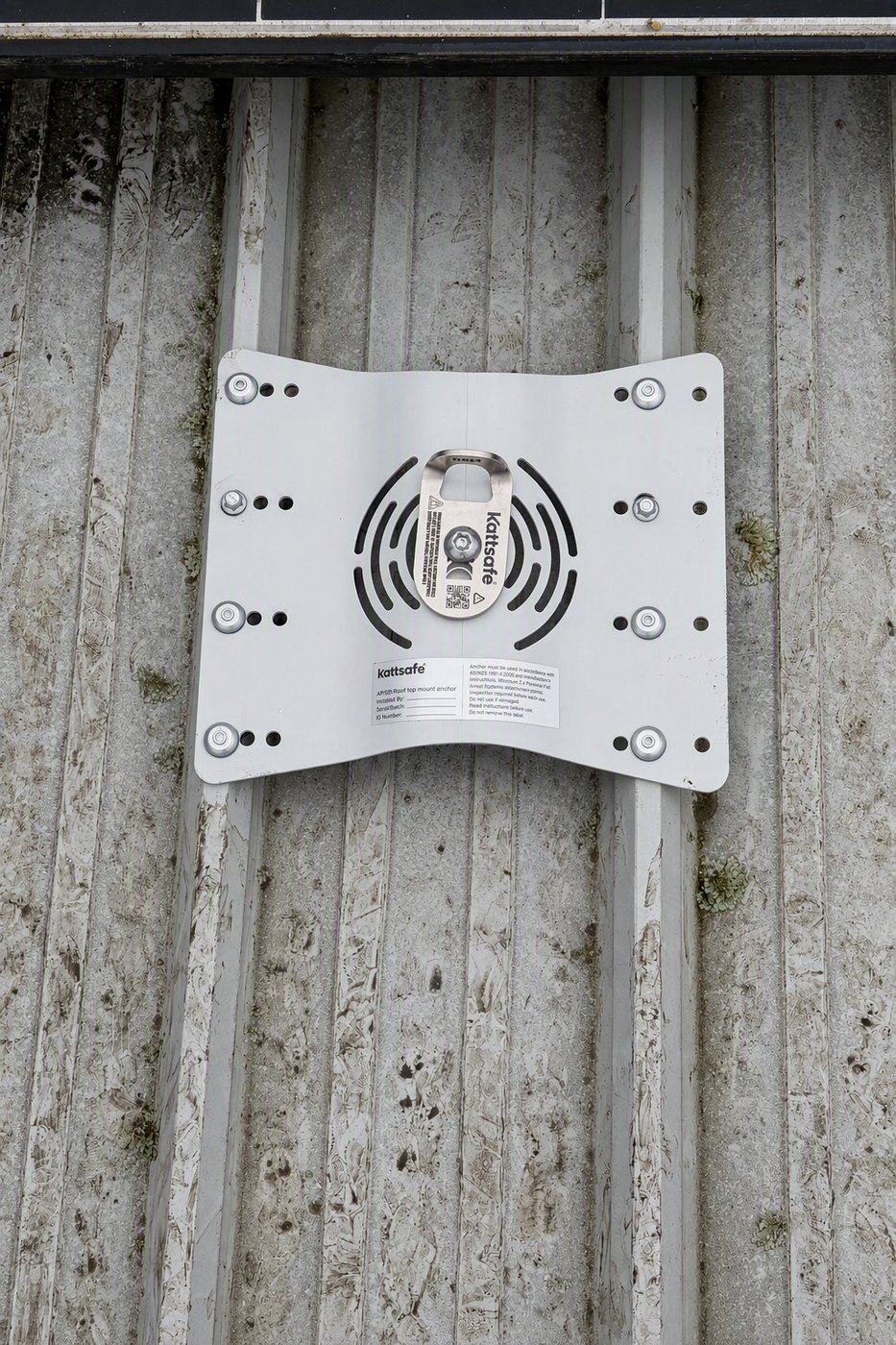
Rope access: you're hanging off it all day
Rope access is a different discipline with different demands. When a rope access technician works on a facade, they're suspended off the anchors for the entire job. The load isn't a one-off shock. It's constant, for as long as the work takes.
Rope access also relies on redundancy. A technician works on two ropes: a working line that takes their weight, and a separate safety or backup line, each independently anchored. If one line or anchor were to fail, the other holds them. That backup isn't optional. It's built into the way rope access works, and it's covered by its own set of standards, AS/NZS 4488.
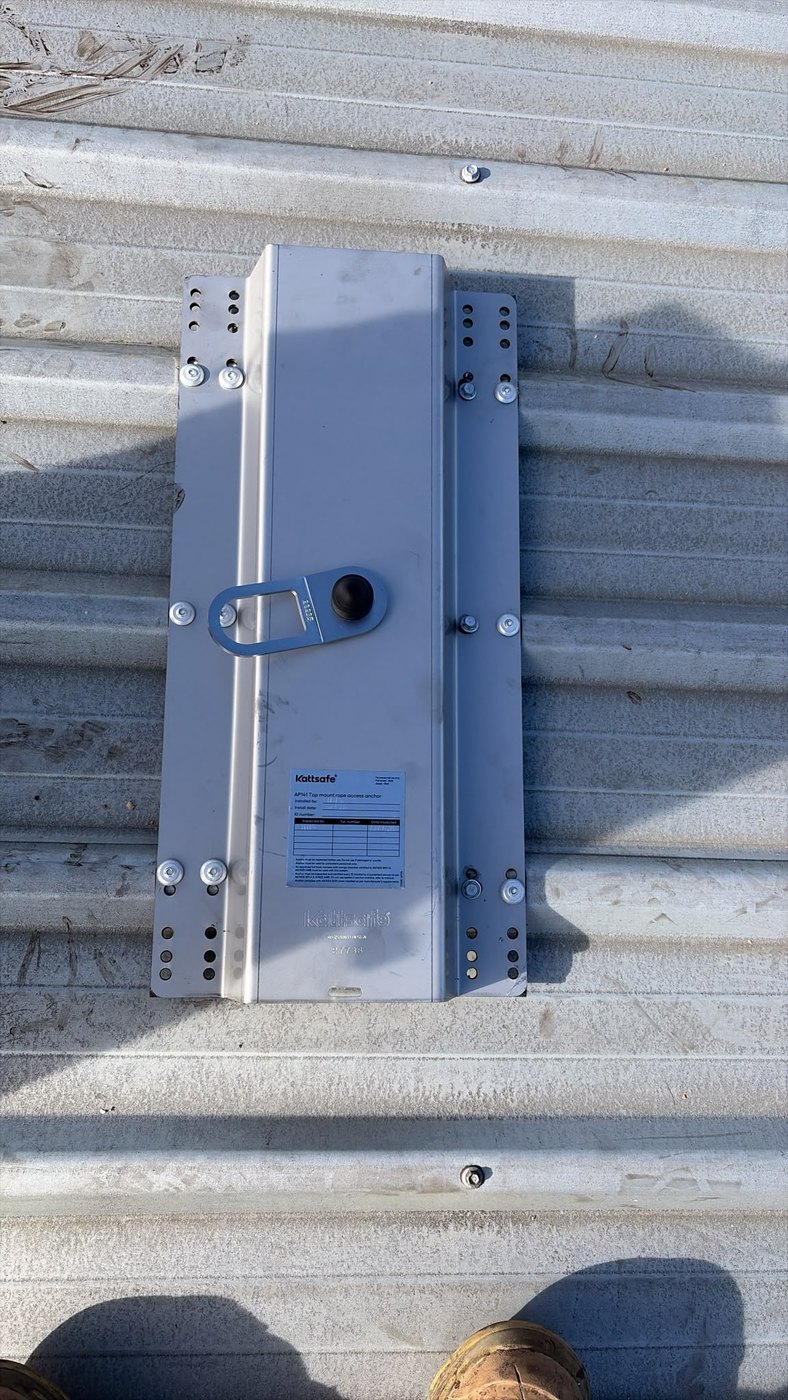
Why you can't treat one as the other
This is where a lot of buildings get caught out. An anchor that's perfectly fine for a maintenance worker to clip onto with a harness is not automatically rated or suitable for someone to abseil off for hours at a time.
Different loadings. Different standards. Different job.
If facade cleaning, caulking, window work or repairs are going to be carried out on ropes, the anchors need to be right for rope access and set up with the redundancy that method requires. Assuming the existing roof anchors will do the job, without checking, is a risk that sits with the building owner.
It's not just the anchor, it's the layout
To complicate it a little further, plenty of anchors are rated for more than one use. Some are certified for both fall arrest and rope access. So you can't always tell what a building is set up for by looking at a single anchor.
Whether a building can actually be worked on ropes comes down to the whole system, not one point. The anchors need to be rated for rope access, but they also need to be in the right place and laid out so a technician can rig a proper two-rope system, positioned correctly relative to the work face. The whole arrangement has to comply with the rope access code of practice (IRATA ICOP) and AS/NZS 4488. On concrete in particular, the location and layout of the anchors make a real difference to what's possible and what's safe.
This is why we don't take anchors at face value. We look at the rating and the layout together before anyone goes over the edge.
Certification isn't a one-off
Whichever type you have, anchor points are not install and forget. They need to be inspected and load tested every 12 months to stay compliant, whether they've been used heavily or not at all. Miss it, and trades legally can't connect to your system. Weather, corrosion and the condition of the structure they're fixed to all change over time, which is exactly why the annual check exists.
It's also worth knowing that the key standards in this area were updated in 2025. If your anchor documentation goes back several years, it's a good idea to have someone confirm your systems still meet current requirements.
The takeaway for building managers
Two simple things protect you.
Make sure the anchors on your building match the work that's actually being done, not just the work someone had in mind when they were installed.
And keep them tested and certified, so that when a contractor turns up to work at height, the system they're trusting their life to is known to be sound.
At Hayes Height Services we install, test and certify height safety anchor systems across Melbourne, and we work off them every day on rope access. If you're not sure whether your building's anchors are right for the work being planned, or when they were last certified, we're happy to take a look.